Miami Book Fair
Context
A responsive redesign built to scale with one of the largest literary events in the country.
Miami Book Fair connects authors and readers through both physical and digital experiences. The existing site couldn't keep up with the fair's growing ecosystem of events, so our team rebuilt it from the ground up, with a scalable design system at the core.
Team
Alexis Alvarez, Everst Montero, Matías Di Gesu, Luis Gutiérrez
Client
Role

Role & Scope
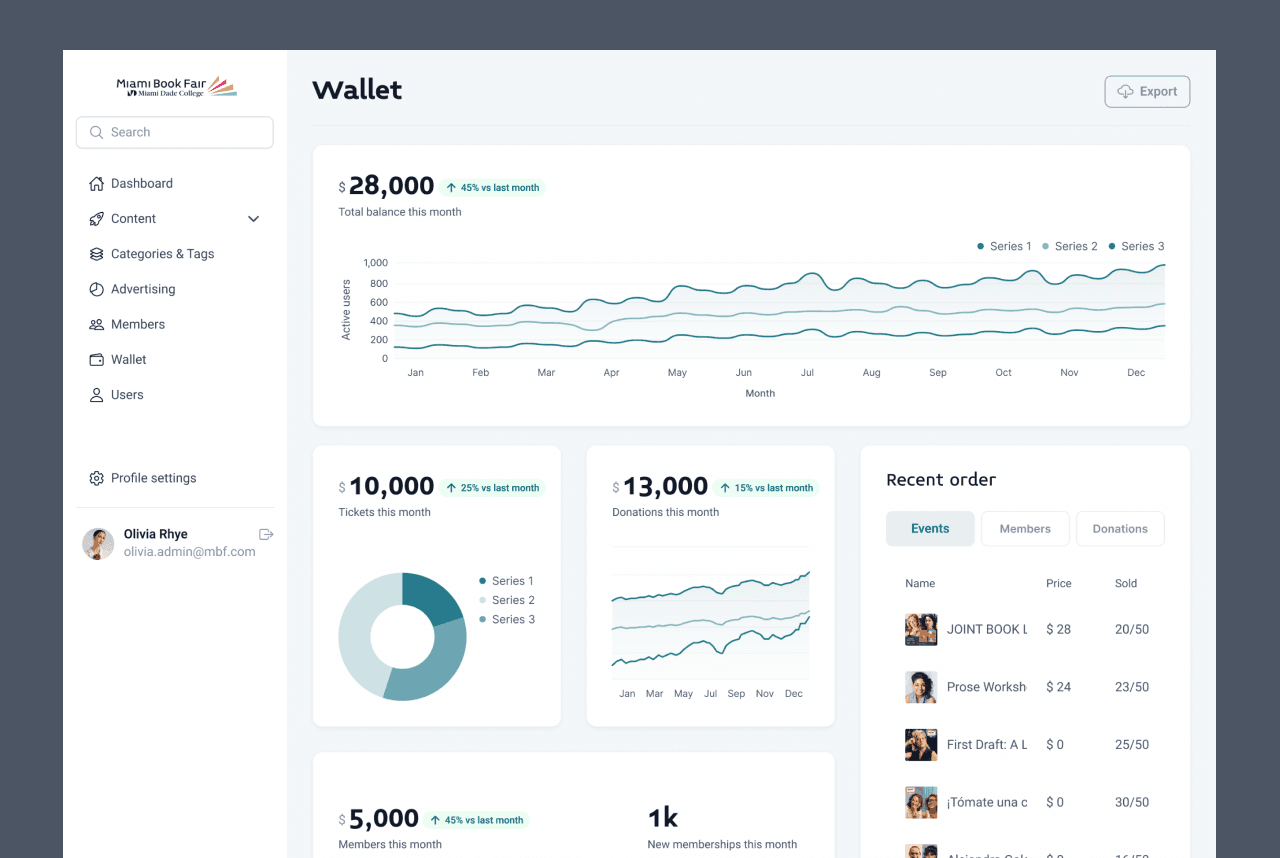
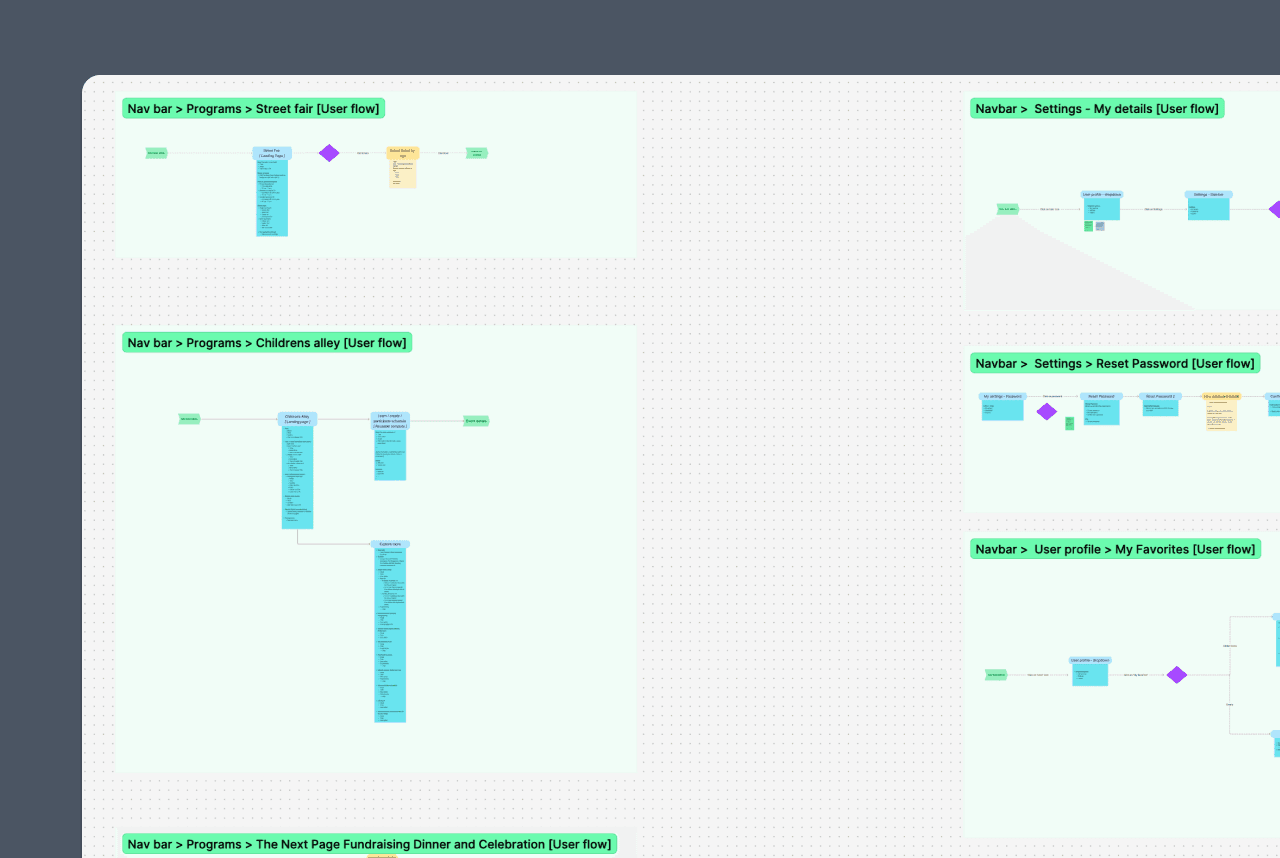
I was involved from early research through final design, working across UX and UI with a focus on the visual system: building the components and tokens that gave the team a consistent foundation to design from. That meant mapping out user flows across the entire site, from browsing programs and events to managing account settings, so every interaction followed the same logic no matter where you were on the site.
The challenge
The existing platform struggled with navigation complexity and didn't have a scalable structure to keep up with a growing ecosystem of events and content. The challenge was creating something cohesive, accessible and flexible that still felt true to the fair's cultural mission.
Before jumping into design, we needed to understand what was actually happening. We went through existing analytics and past user feedback to spot where visitors were getting lost, and looked at other large scale event and cultural platforms to see what worked for similar audiences. From there, card sorting helped us understand how visitors naturally grouped content, and we built a new sitemap around it.

The UI result
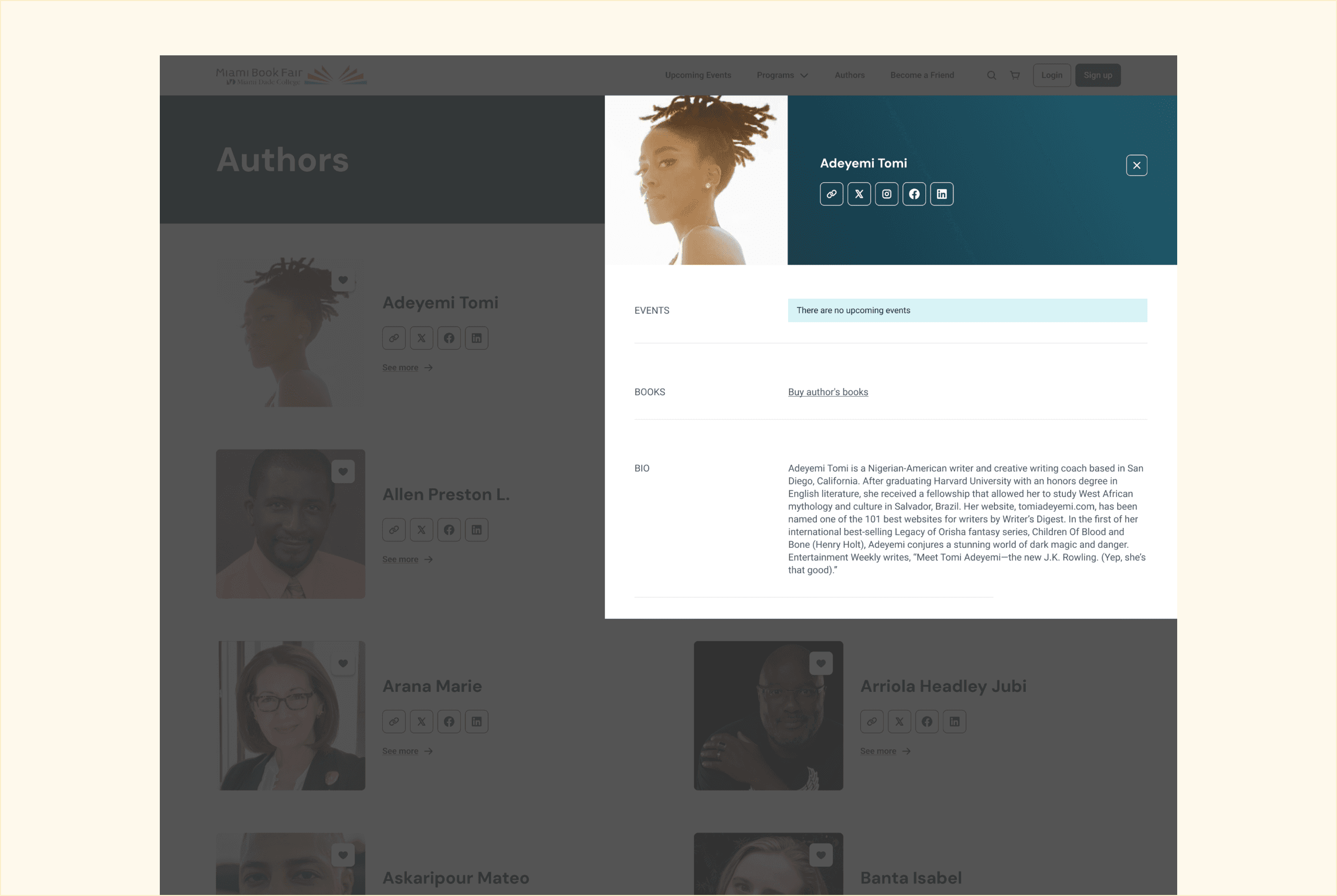
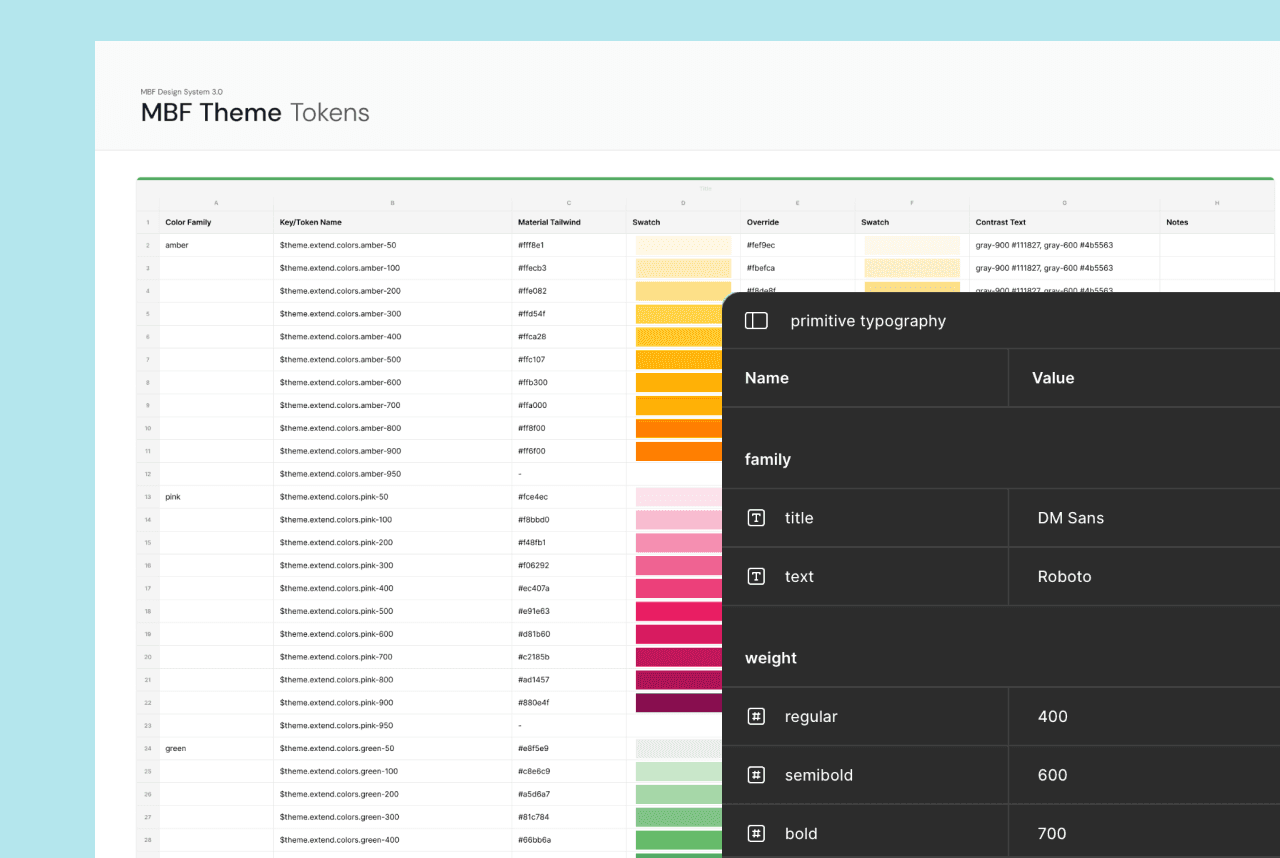
One of the clearest examples of the design system in action wasn't just a nice looking style guide, it was an actual toolkit the whole team could build from. Typography and color were set up as reusable tokens (a title typeface, a text typeface, and defined weights) so every screen pulled from the same source instead of one off styles that would drift apart over time.
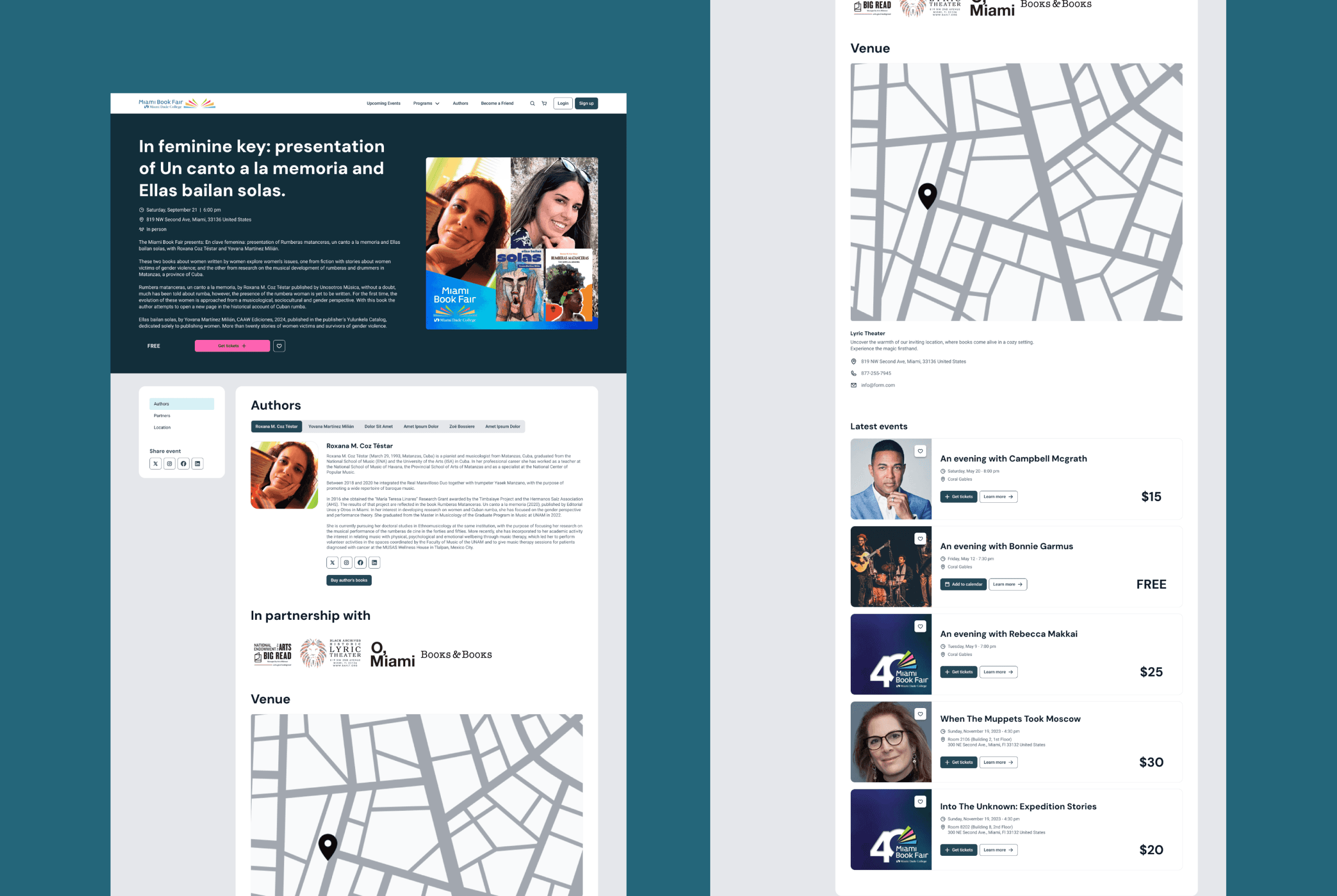
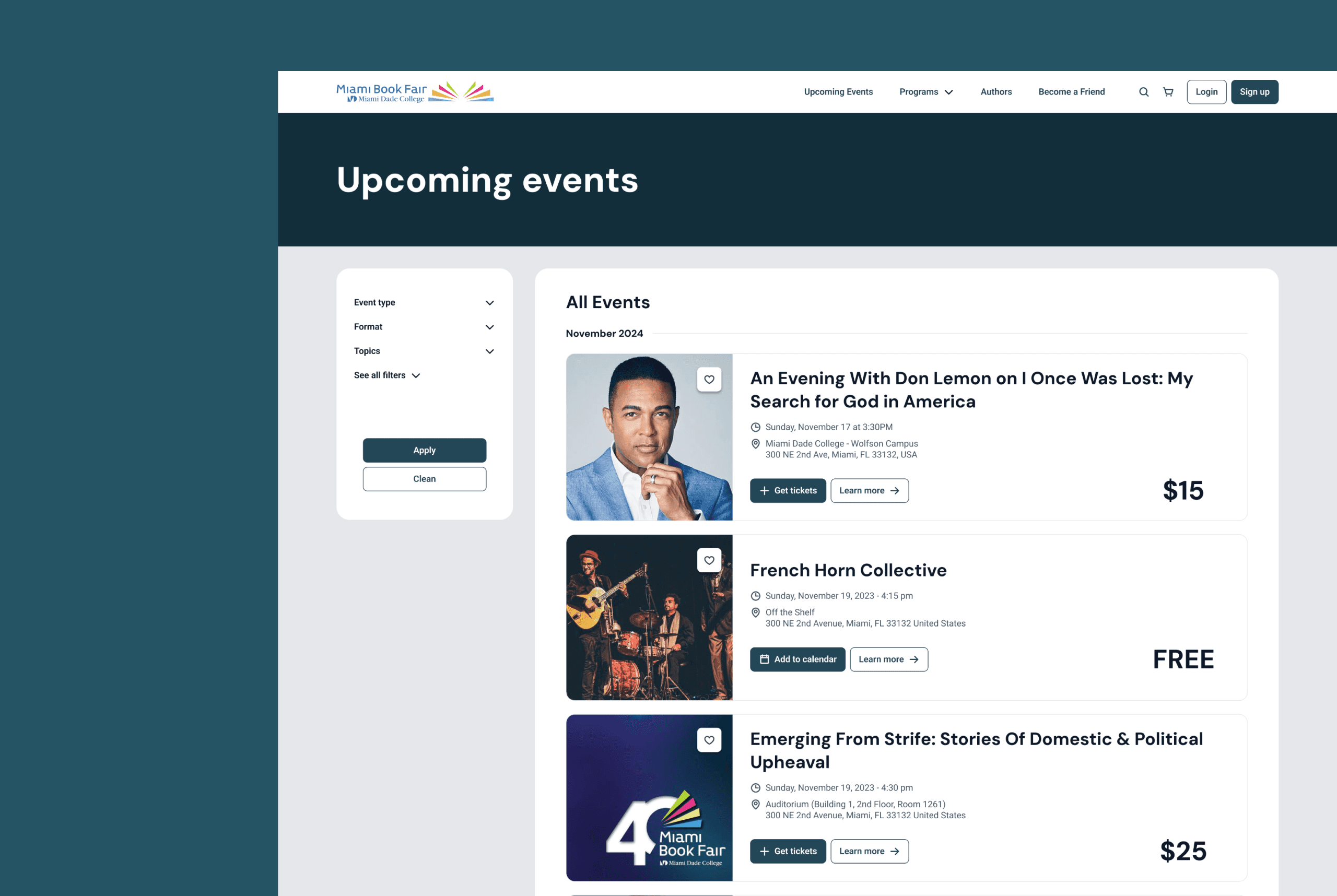
That structure is what made the event page template possible: instead of designing each event individually, every section (event info, image, authors, venue) pulls from the same inputs an admin fills in when creating an event, so new events could go live without a designer touching a single screen.

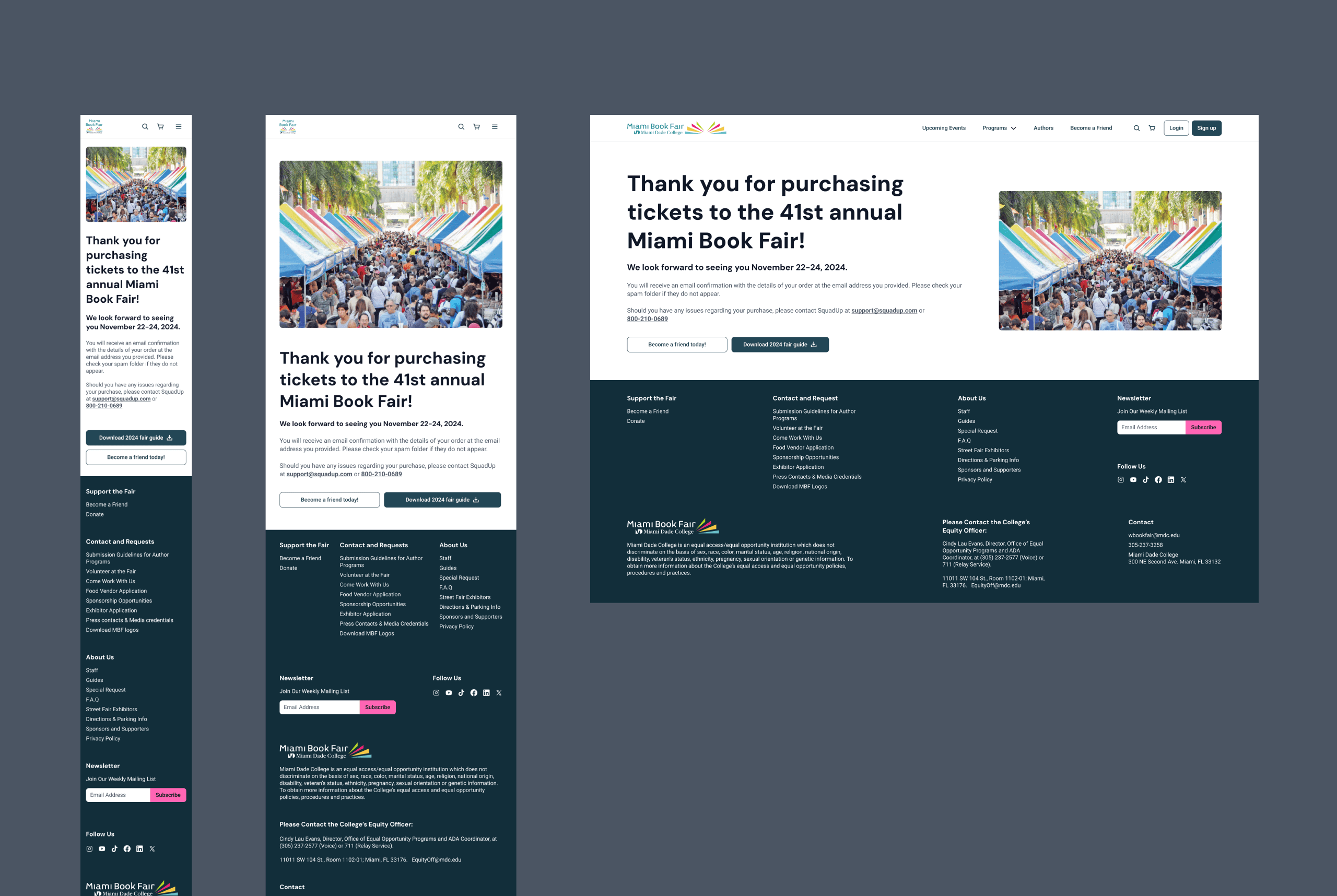
Ticket purchasing was another area that needed real structure. We mapped the entire flow, from an empty cart through checkout to confirmation, so every state had a clear, consistent screen instead of leaving people guessing.